
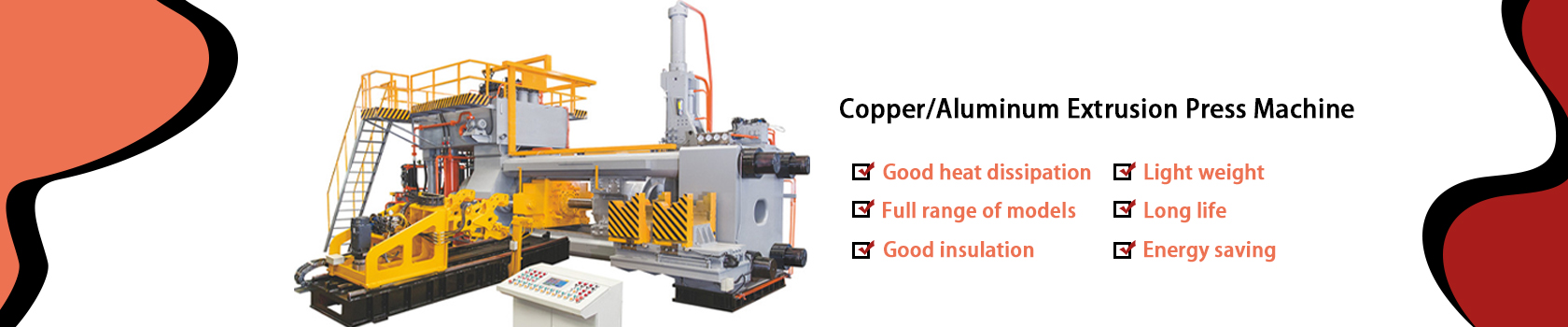
How to Choose the Right Aluminum Extrusion Press Tonnage (JY-630 to JY-2500)
Choosing an aluminum extrusion press starts with one number: tonnage. The rated extrusion force decides how large a billet the machine can push, how thick a profile it can form, and how much steel, hydraulics, and floor space the whole line will need. Get the tonnage right and the rest of your plant planning falls into place. Get it wrong and you either cannot extrude your target profile or you overpay for capacity you will never use.
The J&Y JY series covers the full practical range for aluminum profile makers, from the JY-630 at 6,300 KN (630 ton) up to the JY-2500 at 25,000 KN (2,500 ton). This guide explains how to read those numbers and pick the model that fits your billet, your alloy, and your output target.
Why Tonnage Is the First Decision
Tonnage is the single largest cost and capability driver on an extrusion press. The rated extrusion force determines the weight of the main frame, the size of the main cylinder and oil tanks, the capacity of the pump set, and the load your foundation must carry. A 630-ton press and a 2,500-ton press are different machines, not different sizes of the same machine.
For daily operation, tonnage also sets the maximum billet cross-section you can process and the wall thickness you can hold on thin profiles. When buyers ask us for a quotation, the first question we ask is always about billet diameter and profile shape, because those two facts point directly to the right JY model.
The JY Series at a Glance
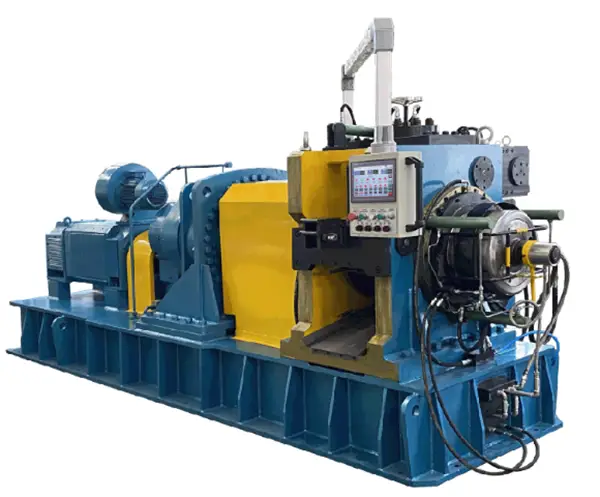
The table below lists the real specifications of every JY model we build. All share the same four-column horizontal structure with a top-mounted oil tank, a stable 21 MPa working pressure, and an extrusion speed of 40 to 50 mm/s. What changes with tonnage is force, locking, perforation, motor power, barrel size, and host dimensions.
| Model | Rated Extrusion Force (KN) | Fixed Work Stress (MPa) | Locking Force (KN) | Perforation Force, Double Action (KN) | Extruding Speed (mm/s) | Main Motor Power (KW) | Barrel Inner Hole (mm) | Host Dimensions L x W x H (m) |
|---|---|---|---|---|---|---|---|---|
| JY-630 | 6300 | 21 | 633 | 1030 | 40 | 75 KW x3 | Dia. 85-115 x 500 | 6.8 x 2.3 x 2.8 |
| JY-800 | 8000 | 21 | 633 | 1030 | 50 | 132 KW x3 | Dia. 105-135 x 550 | 9.2 x 2.3 x 3.1 |
| JY-1000 | 10000 | 21 | 800 | 1293 | 40 | 132 KW x3 | Dia. 125-135 x 600 | 10 x 2.4 x 3.3 |
| JY-1250 | 12500 | 21 | 800 | 1293 | 50 | 132 KW x4 | Dia. 135-165 x 650 | 11.5 x 2.5 x 3.4 |
| JY-1630 | 16300 | 21 | 1586 | 2500 | 40 | 132 KW x5 | Dia. 155-205 x 750 | 13.5 x 4.2 x 4.1 |
| JY-1800 | 18000 | 21 | 1586 | 2800 | 40 | 132 KW x6 | Dia. 175-225 x 800 | 14.5 x 4.2 x 4.1 |
| JY-2200 | 22000 | 21 | 1586 | 3000 | 40 | 132 KW x7 | Dia. 195-245 x 900 | 15.5 x 4.7 x 4.5 |
| JY-2500 | 25000 | 21 | 1586 | 3500 | 40 | 132 KW x8 | Dia. 205-265 x 1000 | 18 x 5 x 4.8 |
See the full Aluminum Extrusion Press range and configuration options on our product page.
Match Tonnage to Billet Diameter and Profile
The barrel inner hole decides the maximum billet cross-section the press can accept. A larger barrel bore allows bigger billets and longer effective lengths, which raises yield per cycle. Use the barrel range as your first filter:
Small presses (JY-630, JY-800): barrel Dia. 85-135 mm. Best for construction sections, small industrial profiles, and shops with limited floor space.
Mid presses (JY-1000, JY-1250): barrel Dia. 125-165 mm. The common choice for general aluminum profile factories serving windows, doors, and structural parts.
Large presses (JY-1630 to JY-2500): barrel Dia. 155-265 mm. Built for wide sections, thick industrial profiles, and high annual output.
If your product mix includes tubes or hollow sections, also check the perforation force in the table, because hollow extrusions need a piercing system on top of the main extrusion force.
Single-Action vs Double-Action and What It Means for Tonnage
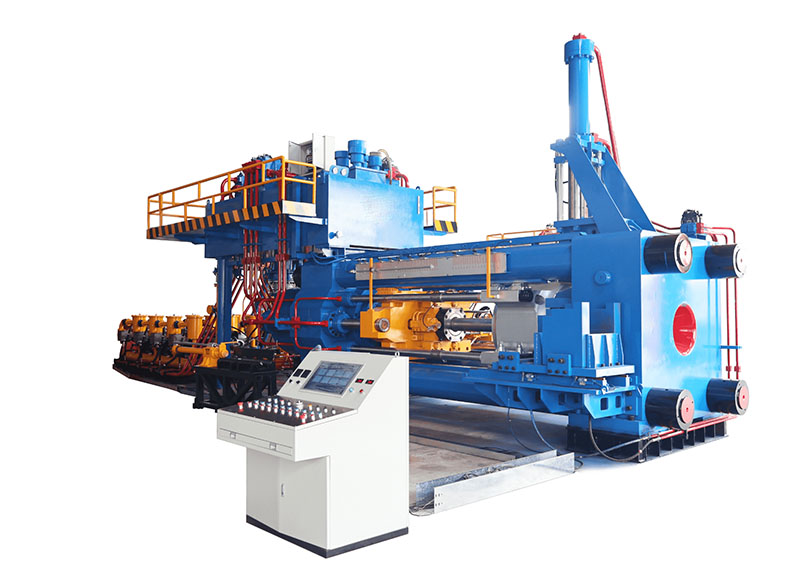
A double-action press adds a separate perforation (piercing) system so it can make hollow profiles with a moving or fixed mandrel, and it supports both forward and backward extrusion. The perforation force grows with the model, from 1,030 KN on the JY-630 to 3,500 KN on the JY-2500. If you plan to extrude tubes, confirm that both the rated extrusion force and the perforation force match your mandrel and wall-thickness requirements.
For solid profiles only, a single-action host is enough and keeps the layout simpler. If you also run copper or hollow products, review our Copper Extrusion Press page to see how the same tonnage logic applies across alloys.
Three Common Sizing Mistakes
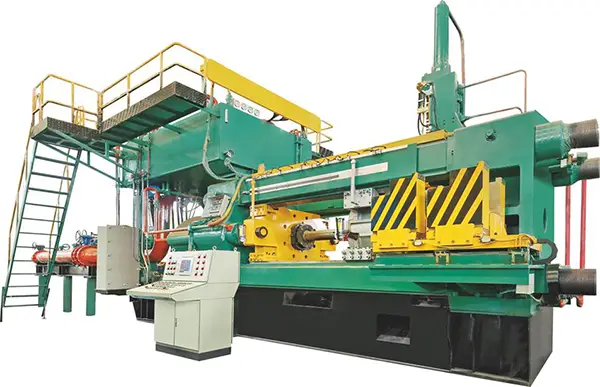
Buying by price alone. A low quote on the wrong tonnage wastes more than it saves. Compare like-for-like specifications, not base prices.
Oversizing for a product you may never run. A bigger press means a heavier foundation, more hydraulic oil, and more floor space. Size to your real billet and output.
Ignoring billet length and barrel liner cost. The container and its liner are precision parts made from high-alloy steel. A larger barrel adds directly to material and machining cost, so only size up if your yield per cycle actually improves.
How J&Y Helps You Select the Right Model
Every J&Y extrusion press is customized to the buyer's billet size, alloy, output target, and plant layout. Rather than publish a fixed price list, we review your production parameters and return a project-based quotation for the exact model you need. As part of that first step we also send a free plant layout drawing so you can plan the workshop before delivery.
A complete aluminum extrusion line also needs upstream equipment. Our Aluminum Melting Furnace range covers billet preparation so your press always receives properly prepared material.
Frequently Asked Questions
What tonnage aluminum extrusion press do I need for my profile?
Start from your billet diameter and profile shape. Match the billet to the barrel inner hole range in the JY table above, then confirm the rated extrusion force covers the section and wall thickness you plan to make. Send us your billet size and we will recommend the exact model.
Can one JY press handle different billet diameters?
Each model has a barrel inner hole range, for example Dia. 85-115 mm on the JY-630 and Dia. 205-265 mm on the JY-2500. Within that range you can run different billet sizes by changing the container liner and mandrel. Crossing into another model's range requires a different press.
Is a bigger tonnage press always better?
No. Higher rated force means a heavier frame, larger cylinder, and bigger pump set, so cost and floor space rise with tonnage. The right press is the one matched to your billet size and profile output, not simply the largest one available.
Do I need a double-action press, and how does it affect tonnage?
If you make tubes or hollow sections, you need the double-action perforation system. Check both the rated extrusion force and the perforation force (1,030 KN on JY-630 up to 3,500 KN on JY-2500) against your mandrel and wall-thickness needs. Solid profiles only can use a single-action host.
How do I get a quotation and plant layout for a specific JY model?
Share your billet diameter and length, alloy, target output per year, and a floor plan of your site. Our engineers will propose a suitable JY model, a free plant layout drawing, and a detailed project quotation. This first step carries no obligation.
Get a Customized Recommendation and Free Plant Layout
Tonnage is the foundation of a profitable extrusion line, and the right choice depends on your specific billet, alloy, and output. Tell us what you plan to produce and we will recommend the correct JY model with a project quotation and a free plant layout drawing for your workshop.
Contact: Email [email protected] | WhatsApp +86 13394110095 | Request your free plant layout drawing