
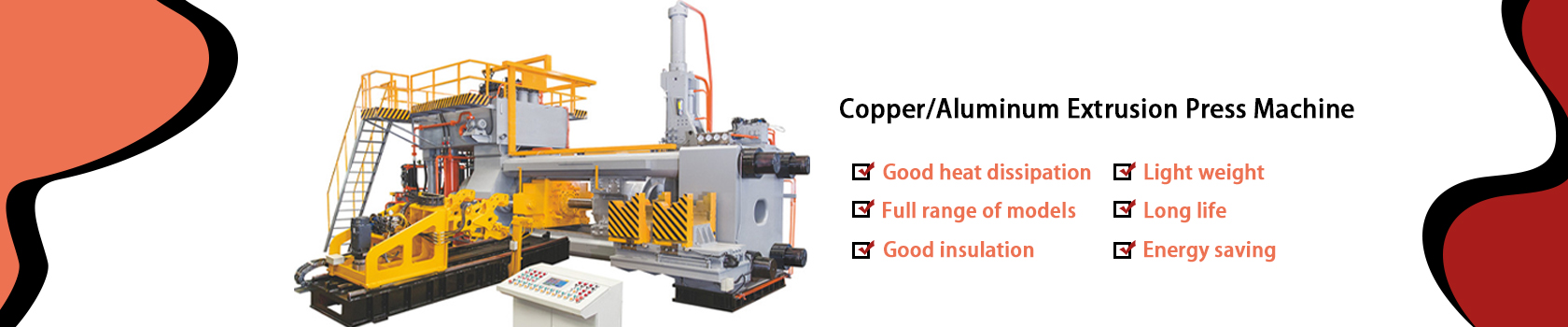
Extrusion Press Hydraulic System: Components, Maintenance and Troubleshooting
The hydraulic system is the heart of every aluminum extrusion press. It generates the force that pushes the billet through the die, controls the speed profile, and manages the complex sequencing of the press cycle. Understanding its components, following a disciplined maintenance routine, and knowing how to diagnose common faults will keep your JY series press running at peak efficiency and avoid costly unplanned downtime.
Key Hydraulic Components
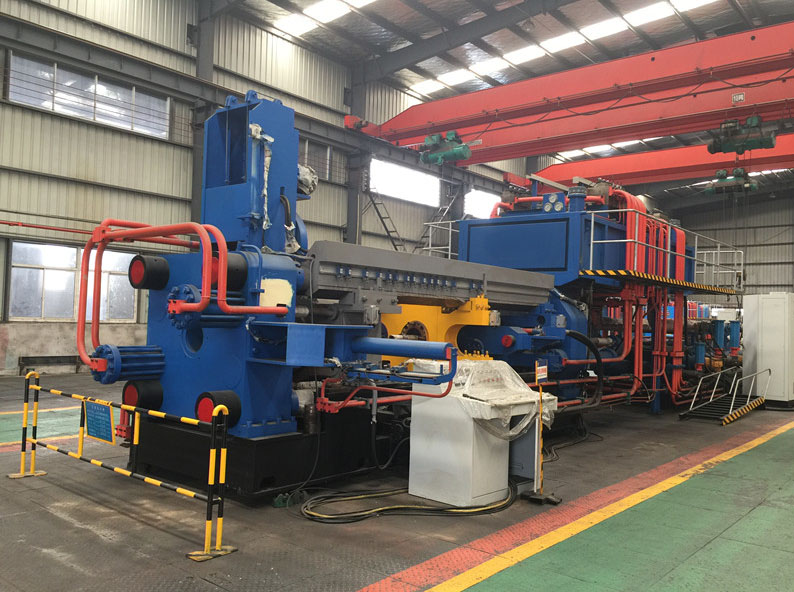
The main hydraulic circuit consists of the main pump group, the main cylinder, the accumulator bank, the valve manifold, the filtration and cooling subsystems, and the hydraulic reservoir with conditioning. Each JY model is sized with pump flow and pressure matched to the rated extrusion force and speed listed in the table above.
Routine Maintenance Schedule
Daily: Check reservoir oil level and temperature; inspect for external leaks at hose connections, cylinder seals, and valve manifold gaskets; verify accumulator pre-charge pressure.
Weekly: Sample oil for water contamination and particle count (target ISO 4406 18/16/13 or better); clean suction strainers; confirm cooler fan operation and heat exchanger delta-T.
Monthly: Replace return-line filter elements; test pressure relief and sequence valve settings against the press specification; check proportional valve response times.
Quarterly: Send oil sample to lab for full analysis (viscosity, TAN, additive depletion, wear metals); inspect main cylinder rod for scoring or pitting; verify accumulator bladder or piston integrity.
Annually: Full fluid change (or per lab recommendation); overhaul main pump group; rebuild valve manifold with new seals and spools; re-certify accumulator pre-charge.
Common Faults and Troubleshooting
| Symptom | Probable Cause | Action |
|---|---|---|
| Press fails to reach rated force | Worn main pump, relief valve set low, internal cylinder bypass | Verify pump flow with flow meter; adjust relief to spec; pressure-test cylinder |
| Extrusion speed unstable or decays | Accumulator pre-charge low, filter clogged, pump cavitation | Recharge accumulator; replace filters; check suction line for restrictions |
| Oil temperature exceeds 60 C | Cooler fouled, fan failure, excessive internal leakage | Clean heat exchanger; replace fan; measure case drain flow on pump and motor |
| Erratic valve response | Contaminated oil, worn proportional solenoids, electrical signal noise | Flush and refill; test solenoid current vs. spool stroke; check grounding and shielding |
| External leaks at cylinder or manifold | Seal fatigue, bolt stretch, vibration | Replace seals; re-torque to spec; install vibration-damping mounts |
Oil Cleanliness and Filtration
Hydraulic oil cleanliness directly determines component life. Maintain ISO 4406 18/16/13 or cleaner at the pump inlet. Use beta-ratio-200 filters on the return line and beta-ratio-75 on the pressure line. Install offline kidney-loop filtration for continuous polishing during operation. Water content must stay below 200 ppm; install a desiccant breather on the reservoir.
Internal Links
For more information about our extrusion press solutions, please visit:
Frequently Asked Questions
What hydraulic oil grade is recommended for JY series extrusion presses?
We recommend ISO VG 46 or VG 68 anti-wear hydraulic oil (HM or HV type) meeting DIN 51524 Part 2. For extreme ambient temperatures, consult the oil supplier for a suitable viscosity index improver package.
How often should the main cylinder seals be replaced?
Under normal operating conditions, main cylinder rod seals and piston seals should be inspected annually and replaced every 2 to 3 years. High-cycle or high-temperature applications may require more frequent replacement.
What is the correct accumulator pre-charge pressure?
Accumulator pre-charge is typically set to 50-60% of the maximum system pressure for bladder types, and per manufacturer spec for piston types. Always verify the exact value on the press hydraulic schematic and recharge with dry nitrogen only.
Can I use biodegradable hydraulic fluid in my extrusion press?
Biodegradable fluids (HEES, HEPG) are compatible if they meet the same viscosity, anti-wear, and oxidation stability requirements as mineral HM/HV oils. A full system flush is required when converting from mineral oil.
How do I know when to change the hydraulic oil?
Do not rely on calendar intervals alone. Send quarterly oil samples to a qualified lab. Change the oil when viscosity shifts more than 10% from new, TAN increases by 0.2 mg KOH/g, or wear metals trend upward. Lab analysis is the only reliable trigger.
Contact us for expert guidance on your extrusion press hydraulic system:
Email: [email protected]
WhatsApp: +86 13394110095
Free plant layout drawing available upon request