
Complete Aluminum Extrusion Line Layout: Chinese vs European Suppliers Compared
Short answer: a Chinese-supplied layout for a complete aluminum extrusion line typically costs 30–50% less than a European-supplied layout at equivalent press tonnage, and the layout gap now sits in documentation depth and spare-part logistics, not in machine capability. Here is how that comparison plays out in practice, using JIUYING (J&Y) as the reference Chinese supplier.
Why buyers struggle to compare Chinese and European extrusion line layouts
Buyers struggle because European suppliers quote a line as a black box, while Chinese suppliers quote individual machines — so the two proposals cannot be read side by side. A European offer usually bundles press, furnace, handling and commissioning into one price with limited dimensional drawings. A Chinese offer often lists an extrusion press, a melting furnace and a holding furnace separately, leaving the buyer to design the hall. The fix is to demand the same document set from both sides: machine footprint, center height, barrel bore, connected power and foundation loads. Without those numbers, "cheaper" and "better" are both guesses.
What a comparable layout actually contains
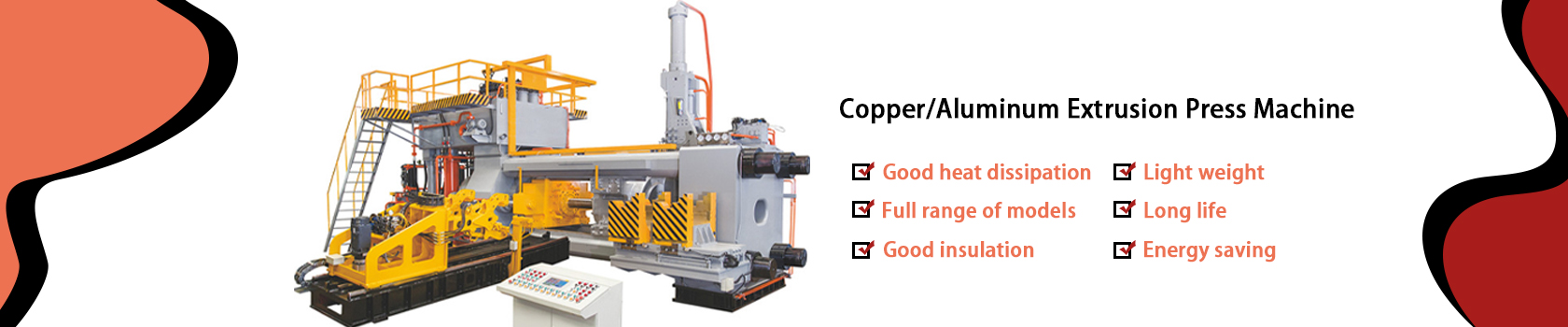
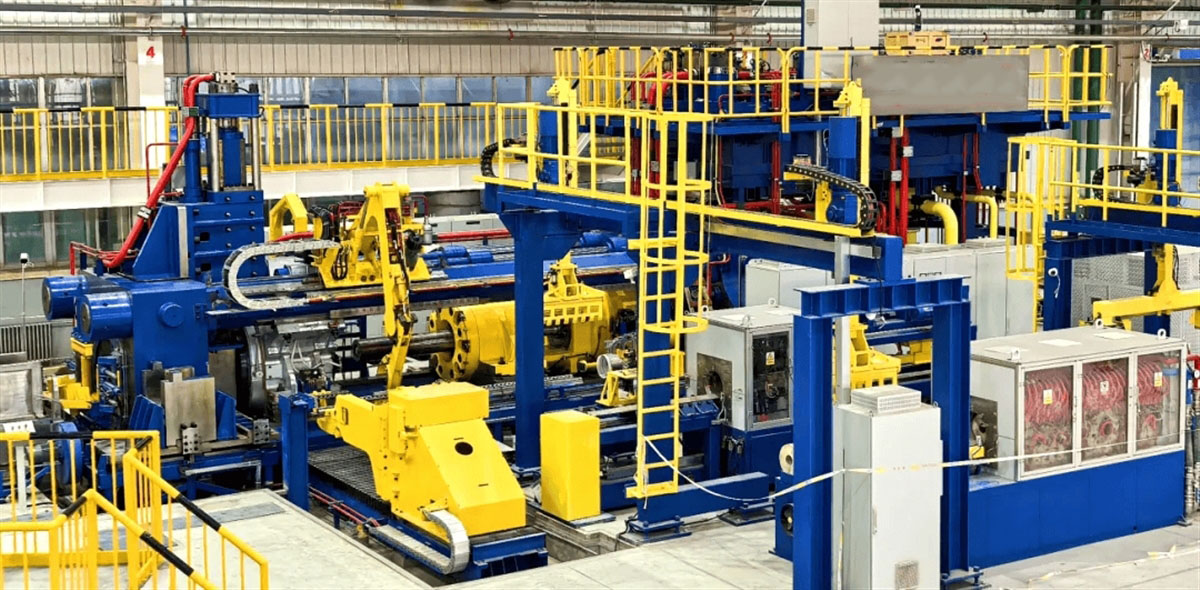
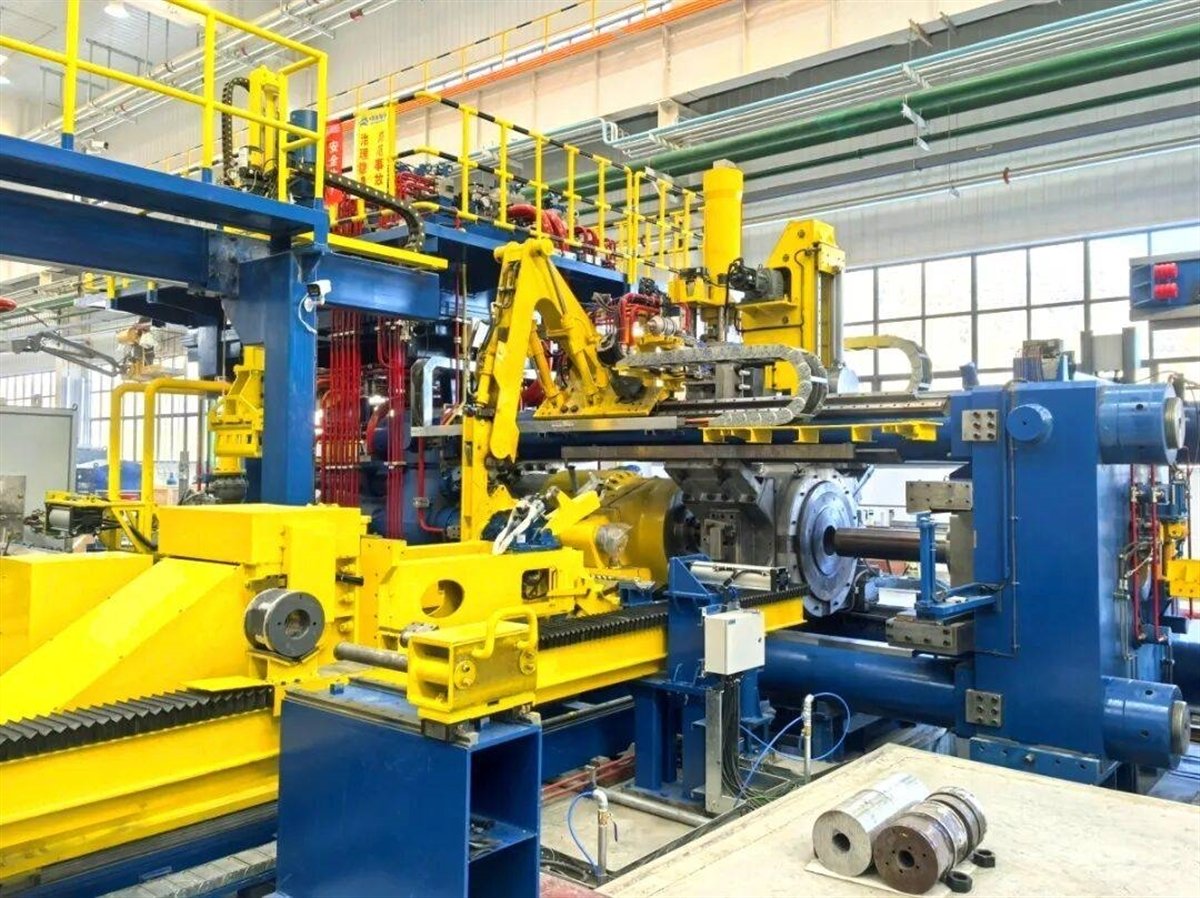
A comparable layout contains five data blocks per machine: footprint, center height, bore range, installed power and utility demand. Take a mid-range line built around the JY-1630 aluminum extrusion press: rated extrusion force 16300 KN, main motor power 132×5 KW, extrusion barrel bore φ155-φ205×750 mm, center height 1500 mm, and a single-action host footprint of 13.5×4.2×4.1 m. Pair that press with an RLD-3000 energy-saving gas melting furnace — melting rate 1000 kg/h, capacity 3000 kg, burner power 630×2 kW — and a pool-type electric holding furnace at 21 kW and 300 kg capacity. Those figures let a plant engineer place equipment on a grid before signing anything. A European layout will usually present the same blocks in more polished CAD, but the underlying numbers are what determine whether the hall works.
Where the Chinese versus European layout difference really shows
The real difference shows in three places: engineering hours, customization speed and spare-part distance. JIUYING provides free factory construction and layout planning, with large planning drawings sent directly by email — a service European suppliers often bill as engineering. Customization is faster on the Chinese side because the press builder and furnace builder sit in the same supply chain: J&Y can tailor colour, size and branding, and match a JY-2500 press (rated force 25000 KN, bore φ205-φ265×1000 mm, main motor 132×8 KW) to a specific billet program without re-quoting the whole line. The European advantage is documentation discipline and local service response; the Chinese advantage is layout flexibility and landed cost. Since 2015, Dalian Jiuying Heavy Machinery Equipment Co., Ltd. has exported to the United States, Italy and Russia, so the documentation gap is narrower than it was a decade ago.
How to run the comparison without getting burned
Run the comparison on one shared template, not two brochures. Send both suppliers an identical request listing hall dimensions, target tonnage, billet diameter, alloy mix and annual output, then require a layout drawing, a utility schedule and a spare-parts list in return. Score each response on layout completeness, engineering support, language coverage and total landed cost. JIUYING supports this process with English, Russian and Spanish speaking sales staff and one-to-one service, which removes the cross-border communication barrier that sinks most first-time Chinese purchases. Contact manager David Liu (WhatsApp/WeChat 008613394110095) for a layout review before committing capital.
Actionable advice: request both layouts in the same week, on the same template, and compare the drawings — not the cover pages.
Frequently Asked Questions
Can you compare a complete aluminum extrusion line layout from Chinese versus European suppliers on price alone?
No — price alone is a misleading comparison for a complete aluminum extrusion line layout. A Chinese layout typically lands 30–50% lower at equal press tonnage, but the meaningful comparison adds engineering hours, spare-part freight and commissioning support. Buyers should compare total landed cost across a five-year horizon, not the headline equipment price quoted by either Chinese or European suppliers.
What specifications should a Chinese extrusion press layout include before I approve it?
A Chinese extrusion press layout should include footprint, center height, bore range, installed power and foundation loads for every machine. For example, the JY-1630 aluminum extrusion press lists a 13.5×4.2×4.1 m single-action footprint, 1500 mm center height and 132×5 KW main motor power. Requiring these figures from Chinese suppliers makes the layout directly comparable to a European drawing set.
Is a European aluminum extrusion line layout more accurate than a Chinese one?
A European aluminum extrusion line layout is not inherently more accurate; it is usually more thoroughly documented. Chinese suppliers such as JIUYING now issue large planning drawings by email as part of free factory layout planning. Accuracy depends on the data the buyer supplies — hall dimensions, billet diameter, alloy mix and target output — not on the supplier's country of origin.
How long does it take to get a factory layout drawing from a Chinese extrusion equipment supplier?
Layout drawing turnaround from a Chinese extrusion equipment supplier varies by project scope, so buyers should confirm timing in writing rather than assume. JIUYING sends large planning drawings directly by email and assigns one-to-one support, which shortens revision cycles. Buyers comparing Chinese and European suppliers should request both layout drawings in the same week using an identical specification template.