
Single-Action vs Double-Action Extrusion Press: Which One Do You Need
Single-Action vs Double-Action Extrusion Press: Which One Do You Need
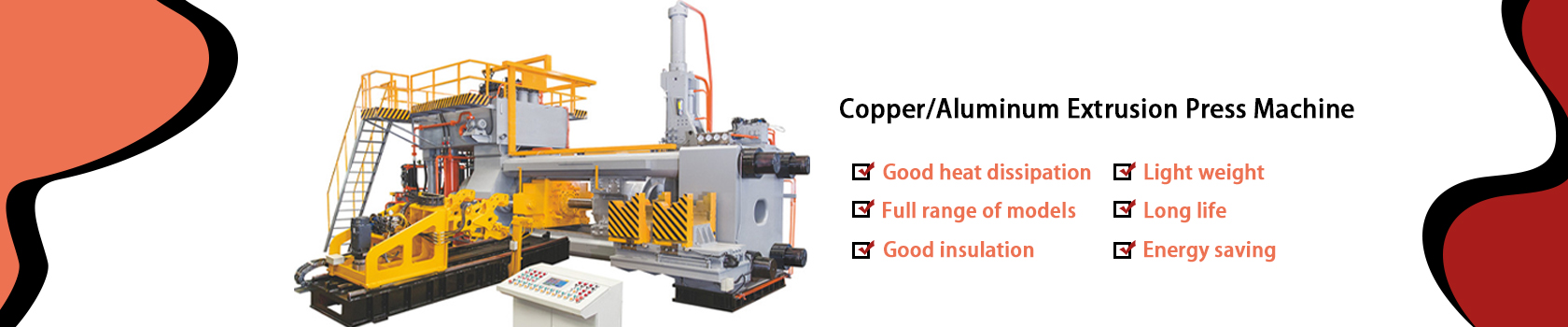
When you plan an aluminum extrusion line, one choice shapes everything else: single-action or double-action. The two press types look similar from the outside, but they differ in how the ram moves, whether a piercing system is built in, and which profiles you can actually produce. Pick the wrong type and you may find your press cannot make the tubes or hollow sections your customers need.
The J&Y JY series, from the JY-630 at 6,300 KN up to the JY-2500 at 25,000 KN, is built as double-action presses with an independent perforation (piercing) system, so they handle both solid profiles and seamless hollows. This guide explains what the terms mean, how the two types compare, and how to decide which one fits your product mix.
What "Action" Means in an Extrusion Press
The word "action" describes how many independent working motions the press performs during a cycle. A single-action press has one main ram that pushes the billet through the die. A double-action press adds a second, independent piercing cylinder whose stem carries a mandrel through the center of the main ram. That second motion is what lets the machine form a hole down the middle of the profile as it extrudes.
How a Single-Action Press Works
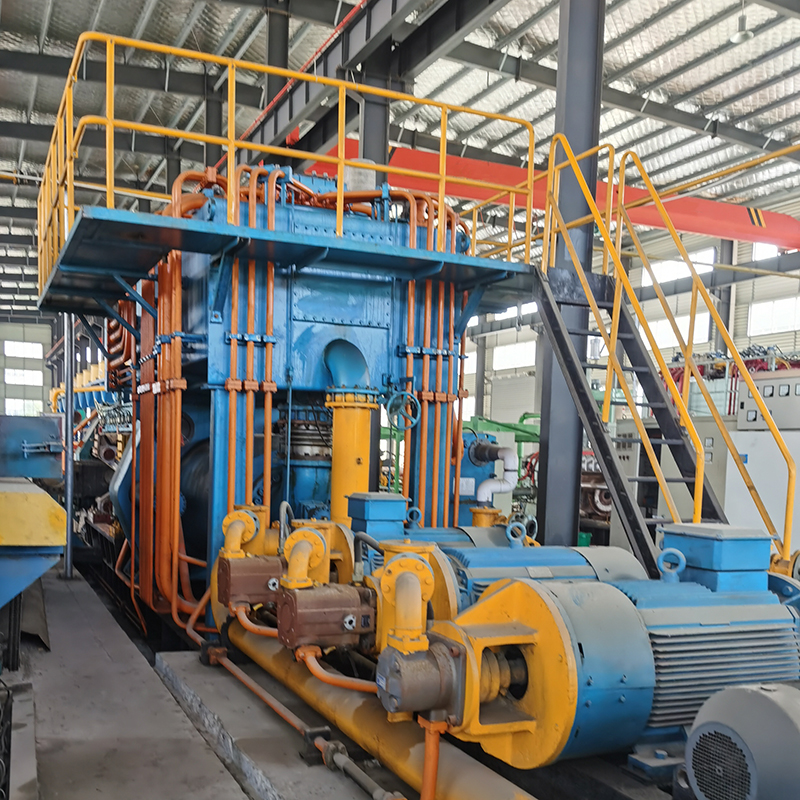
In a single-action press the container is held stationary by the locking force while the main ram drives the dummy block and billet forward. Material flows around the die and forms the profile cross-section. With solid dies this gives solid bars, rods, and sections. With porthole (bridge) dies the metal splits, flows around a bridge, and re-welds to form a hollow profile, but that hollow carries a longitudinal weld seam. A single-action host has the simplest hydraulic circuit and the fewest moving cylinders, which keeps layout and maintenance straightforward.
How a Double-Action Press Works
A double-action press keeps the same main extrusion stroke but adds an independent piercing cylinder. Before or during extrusion the piercing stem advances a mandrel into the billet, so the metal flows around the mandrel and forms a true seamless tube or hollow. Because the piercing motion is separate, the press can also run indirect (backward) extrusion by holding the billet and moving the die, which improves grain structure and surface on some alloys. The trade-off is a more complex hydraulic and control system with coordinated cylinders.
Single-Action vs Double-Action at a Glance
| Feature | Single-Action Press | Double-Action Press |
|---|---|---|
| Working motions | One main ram only | Main ram + independent piercing cylinder |
| Mandrel / piercing | None (solid or porthole-die hollow with seam) | Movable or fixed mandrel through ram center |
| Products | Solid profiles, porthole-die hollows | Solid profiles + seamless tubes and hollows |
| Extrusion modes | Direct (forward) | Direct and indirect (forward and backward) |
| Hydraulic system | Simpler, fewer cylinders | More cylinders, coordinated control |
| Best fit | Solid sections, simpler lines | Tube, pipe, and hollow profile makers |
The JY Series at a Glance
The table below lists the real specifications of every JY model we build. All share the same four-column horizontal structure with a top-mounted oil tank, a stable 21 MPa working pressure, and an extrusion speed of 40 to 50 mm/s. What changes with tonnage is force, locking, perforation, motor power, barrel size, and host dimensions. The perforation force shown is the double-action piercing capacity built into each machine.
| Model | Rated Extrusion Force (KN) | Fixed Work Stress (MPa) | Locking Force (KN) | Perforation Force, Double Action (KN) | Extruding Speed (mm/s) | Main Motor Power (KW) | Barrel Inner Hole (mm) | Host Dimensions L x W x H (m) |
|---|---|---|---|---|---|---|---|---|
| JY-630 | 6300 | 21 | 633 | 1030 | 40 | 75 KW x3 | Dia. 85-115 x 500 | 6.8 x 2.3 x 2.8 |
| JY-800 | 8000 | 21 | 633 | 1030 | 50 | 132 KW x3 | Dia. 105-135 x 550 | 9.2 x 2.3 x 3.1 |
| JY-1000 | 10000 | 21 | 800 | 1293 | 40 | 132 KW x3 | Dia. 125-135 x 600 | 10 x 2.4 x 3.3 |
| JY-1250 | 12500 | 21 | 800 | 1293 | 50 | 132 KW x4 | Dia. 135-165 x 650 | 11.5 x 2.5 x 3.4 |
| JY-1630 | 16300 | 21 | 1586 | 2500 | 40 | 132 KW x5 | Dia. 155-205 x 750 | 13.5 x 4.2 x 4.1 |
| JY-1800 | 18000 | 21 | 1586 | 2800 | 40 | 132 KW x6 | Dia. 175-225 x 800 | 14.5 x 4.2 x 4.1 |
| JY-2200 | 22000 | 21 | 1586 | 3000 | 40 | 132 KW x7 | Dia. 195-245 x 900 | 15.5 x 4.7 x 4.5 |
| JY-2500 | 25000 | 21 | 1586 | 3500 | 40 | 132 KW x8 | Dia. 205-265 x 1000 | 18 x 5 x 4.8 |
See the full Aluminum Extrusion Press range and configuration options on our product page.
How to Decide Which One You Need
Solid profiles only (bars, solid sections, heat sinks): a single-action host is enough and keeps the line simpler, with fewer cylinders to maintain.
Tubes, pipes, or hollow sections with a seamless wall: you need the double-action piercing system. The mandrel forms the bore without a longitudinal weld seam.
Both solid and hollow products: a double-action press covers both from one machine, which is the more flexible choice for a growing shop.
Confirm the piercing force: match the press tonnage to your billet and section using the JY table, then make sure the perforation (piercing) force covers your mandrel diameter and wall thickness.
If you also process copper tube or hollow products, review our Copper Extrusion Press page to see how the same single-action versus double-action logic applies across alloys.
Common Misconceptions
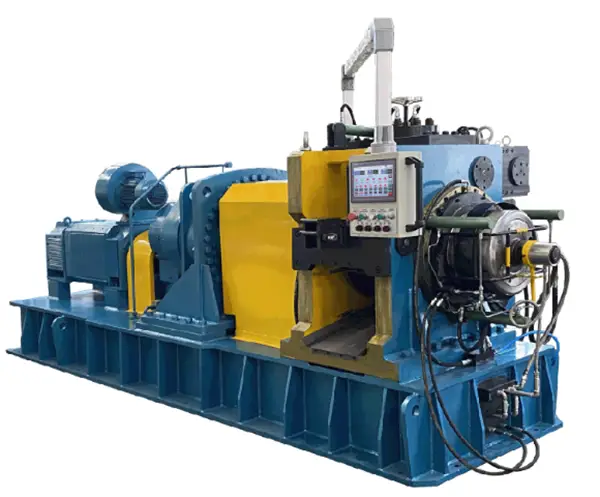
"Double-action is only for big presses." False. Piercing capability scales with the model; the JY-630 already carries 1,030 KN of perforation force.
"A single-action press cannot make hollows at all." It can via porthole dies, but the result has a weld seam. A seamless tube needs the double-action piercing system.
"Piercing force does not matter if I mostly run solids." It only matters for hollows, but it is the limiter when you do run tubes, so size it before you commit to a model.
How J&Y Helps You Choose
Every J&Y extrusion press is customized to your product mix, billet size, alloy, output target, and plant layout. We review whether a single-action host or a double-action piercing system fits your plan, then return a project-based quotation for the exact model you need. As part of that first step we also send a free plant layout drawing so you can plan the workshop before delivery.
A complete aluminum extrusion line also needs upstream equipment. Our Aluminum Melting Furnace range covers billet preparation so your press always receives properly prepared material.
Frequently Asked Questions
What is the difference between a single-action and double-action extrusion press?
A single-action press has one main ram that pushes the billet through the die, making solid profiles and porthole-die hollows with a weld seam. A double-action press adds an independent piercing cylinder with a mandrel that forms seamless tubes and hollows, and it can also run indirect extrusion.
Do I need a double-action press to make hollow profiles?
Only if you need seamless hollows without a weld seam. Solid profiles and porthole-die hollows can be made on a single-action press, but tubes and seamless hollow sections require the double-action piercing system.
Can a JY double-action press also run solid profiles?
Yes. The double-action piercing system is used only when needed. The same machine runs solid bars, rods, and sections by simply not engaging the piercing stem, so one press covers both product types.
How much piercing (perforation) force do I need for tubes?
It depends on your mandrel diameter, wall thickness, and alloy. In the JY range the perforation force runs from 1,030 KN on the JY-630 to 3,500 KN on the JY-2500. Send us your tube size and wall thickness and we will confirm the right model.
How do I get a quotation and plant layout for a specific JY model?
Share your product type (solid or hollow), billet diameter and length, alloy, target output per year, and a floor plan of your site. Our engineers will propose a suitable JY model, a free plant layout drawing, and a detailed project quotation with no obligation.
Get a Customized Recommendation and Free Plant Layout
The right press type depends on what you actually make: solid sections, seamless tubes, or both. Tell us your product mix, billet size, and output target and we will recommend the correct JY model with a project quotation and a free plant layout drawing for your workshop.
Contact: Email [email protected] | WhatsApp +86 13394110095 | Request your free plant layout drawing